
Person
Queen of Lothric
Mentioned character in Dark Souls III
The Queen of Lothric (ロスリックの王妃) is a mentioned character in Dark Souls III.
Lore
The Queen of Lothric was the latest matriarch of the titular kingdom. She was wed to King Oceiros, and likened to the goddess of fertility and bounty.
She delivered three scions to the royal bloodline during her time as queen. The first of them was Lorian, a boy raised to be a knight, who grew up into a hero and found glory battling the Demons and defeating their Prince in combat. The second one was Lothric, a sickly boy born to be a Lord of Cinder, left for High Priestess Emma to raise. The last one was Ocelotte, a mysterious child of dragons whose birth caused the Queen's equally mysterious disappearance.
These were not her only children, however. The Queen of Lothric had a holy maiden who was also her direct offspring, while sharing no blood relation with Lothric's royal family. Whether she had the child before her marriage with Oceiros or during it is not clarified.
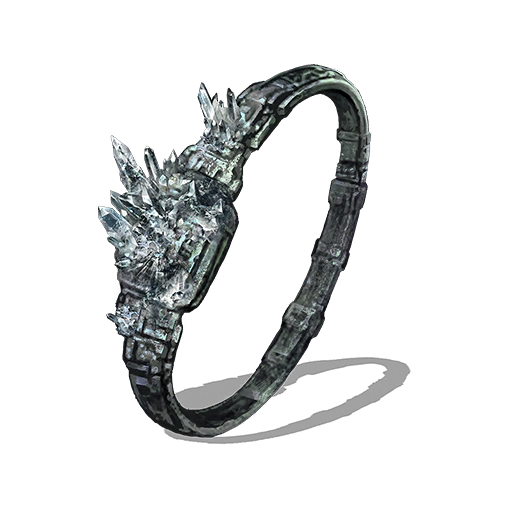
Before her disappearance, the Queen had shown great interest in the Unkindled, regularly visiting the Cemetery of Ash to wish good fortune to the deceased buried there. She also had a special crystaline ring enshrined in those untended graves so that it may one day be of use to those lost souls, should they ever be stirred to action. Due to this peculiar affinity for the Unkindled and the restoration of magic, it's possible that she was the one who created the Ashen Estus Flask, an artifact found within that very cemetery which also aids the Unkindled in their quest.

Artifacts
Theories
There are a few theories on the real identity of the Queen of Lothric.
The Queen of Lothric as Gwynevere
This theory mainly hinges on the fact that the Queen's Blessings were the very same that Gwynevere created in the time of Lordran. It is also supported by the description of said item, claiming that the Queen "was initially revered as a goddess of fertility and bounty". However, in the Japanese version, that sentence is different and does not imply divinity.
Gertrude, the Queen's daughter, also uses Bountiful Light, a miracle reminiscent of Gwynevere's own Bountiful Sunlight except less powerful. Lastly is the description of Projected Heal, which mentions the people of Lothric trying to recall the Princess of Sunlight's image as the kingdom nears its end. This desire, coupled with the previously-stated resemblances, has led some people to conclude the two characters are the very same. The Japanese text would seem to strengthen this idea, but whether or not it's meant to be taken literally or metaphorically is left willingly ambiguous.
The Queen of Lothric as a descendant of Gwynevere
Many points support the notion that the Queen of Lothric is actually one of the many descendants of Gwynevere rather than the Princess of Sunlight herself.
One of the aspects Dark Souls III focuses on in regards to Gwynevere's character is the fact that she was a beloved wife and mother who had many children that she raised herself. This is evidenced by the characters of Rosaria, Mother of Rebirth and the Dancer of the Boreal Valley, whose souls can be transposed into miracles tied to the Princess of Sunlight. The latter is outright stated to be part of the old royal family, the old gods of Anor Londo, which confirms that Gwynevere left quite a few descendants, and that the Queen of Lothric could very well be one of them. Her ability to create Divine Blessings would then be a trait of her divine descent. She is not merely a derivative of Gwynevere however, as her affinity with magic, one the Princess of Sunlight never displayed, allowed her to create a version of the holy waters specialized on magic restoration in the form of Hidden Blessings.
The Queen of Lothric is never referred to as Gwynevere, and the only overt connection to her is framed as a resemblance or likeness. Meanwhile, the game uses both Gwynevere's name and title of Princess of Sunlight rather often, and she's even still revered and named by the Way of White and Darkmoon Blades, suggesting that her figure, importance and domain as a goddess is anything but forgotten or obscured. This includes her statue in Anor Londo and painting in the Irithyll Mansion.
Gertrude herself is a point in favor of this theory. Her knowledge of Bountiful Light could initially seem like solid proof of her being a child of Gwynevere, but a few discrepancies must be noted. Since Gwynevere's superior miracles were all imparted to her maidens directly, it stands to reason that Gertrude would also know them. Instead, she uses and teaches a decidedly less impressive version of Bountiful Sunlight while not only being a maiden of the Queen, but also her direct child. It's also worth noting that in the Japanese version, there exists no connection between Gertrude's title as "Heavenly Daughter" and the "heavenly children" of Gwynevere.
Analyzing the Queen of Lothric's behavior also shows very little overlap with that of the Gwynevere established within the same game. The Princess of Sunlight is characterized as a kind, loving figure who was cherished and adored in turn. A great mother who raised each of her children with love, remembered fondly to the very end. In contrast, the Queen of Lothric willingly married into a family bent on creating the perfect sacrifice and eager to do anything in order to achieve that. She gave life to Lothric just so he may one day be used as kindling, without even raising him herself but handing him off to a wet nurse instead. She did nothing when her own daughter was imprisoned and left to wither away in a cell, and also abandoned her newborn son with her maddened husband.
Even the way in which they disappeared differed, with Gwynevere surrounded by many fellow Gods and her husband Flann, while the Queen of Lothric vanished without a trace on her lonesome, leaving her kingdom and family behind to very little fanfare.
Sources
Adapted from the original article, under CC BY-SA 3.0.